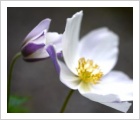
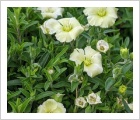
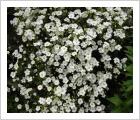
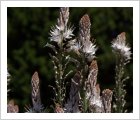
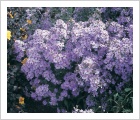
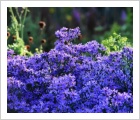
These new wind flowers are considered to be amongst the most outstanding perennial plants to be released this century. Raised by Scottish nurserywoman, Elizabeth McGregor, these plants stay where they are planted and don’t spread like Japanese windflowers. Read more about Anemone ‘Wild Swan’
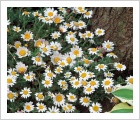
This superb selection was raised here at Lambley and was named after David’s late mother, Alice. It has grey-green evergreen foliage and produces perfectly shaped lemon daisies from early spring until autumn. This drought tolerant sun lovers best cut back hard in winters. Read more about Anthemis ‘Alice Glenn’
We apologise that this plant is currently sold out.
This hardy mediterranean plant forms a compact cushion of finely divided blue-green leaves which is covered with masses of snow-white daisies in late spring and summer. Happiest in full sun and well-draining soil, growing up to 20cm high by 50cm wide. Read more about Anthemis cretica ssp. carpatica ‘Karpatenschnee’
It’s more than thirty years since Lambley was given this beautiful plant by the late Dame Elisabeth Murdoch, who had it growing in her marvelous Cruden Farm garden. Read more about Anthemis ‘Mrs E. C. Buxton’
This superb plant, a hybrid between Anthemis tinctoria and the grey leaved spring flowered A. cupaniana, combines the good points of each. Read more about Anthemis ‘Susannah Mitchell’
We apologise that this plant is currently sold out.
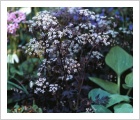
Rarely offered, ‘Ravenswing’ makes clumps of chocolate-purple, lace-like foliage clumps from which 140cm tall black stems carry ivory white Queen Anne’s Lace flowers during spring and early summer. Read more about Anthriscus sylvestris ‘Ravenswing’
We apologise that this plant is currently sold out.
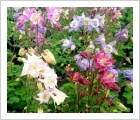
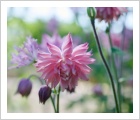
‘Biedermeier’ is the very best of all the columbines for picking for a vase. The upward facing flowers don’t tangle when they are cut and there are many flowers to a stem. This is a mixed strain in nearly all the columbine colours white, red, purple, pink, blue and bicolor. Read more about Aquilegia ‘Biedermeier’
An old favourite (we first listed this in our 1987 catalogue) carries exquisite, elegant, long spurred flowers with mauve blue petals and white corollas on 60-80cm tall stems during mid spring to early summer. Aquilegias are happy in any sunny or lightly shade spot. Read more about Aquilegia caerulea ‘Heavenly Blue’
An old favourite (we first listed this in our 1987 catalogue) this columbine carries exquisite and elegant long spurred white flowers nicely spaced on 60-80cm tall stems during mid to late spring and early summer. Aquilegias are happy in any sunny or lightly shade spot. Read more about Aquilegia caerulea ‘Krystal’
1 plant for $9.00, 3 plants for $24.00, 10 plants for $70.00
An old favourite (we first listed this in our 1987 catalogue) this columbine carries large, elegant, long spurred flowers with carmine petals and white corollas nicely spaced on 60-80cm tall stems during mid to late spring and early summer. Read more about Aquilegia caerulea ‘Rotstern’
An heirloom variety of columbine with fully double burgundy coloured flowers in spring. Happy in any sunny or lightly shaded position as long as the soil isn’t allowed to parch. Cutting back after flowering will promote the growth of a mound of lovely blue-green leaves. Read more about Aquilegia vulgaris ‘Ruby Port’
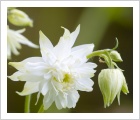
This loveliest of columbines is apple green in bud and opens to green tinged double white flowers. When fully open the flower looks like a small clematis. Easily grown in any sunny or lightly shaded spot it will happily self sow in the garden. 60cm tall by 50cm across. Read more about Aquilegia vulgaris var. stellata plena ‘Green Apples’
From spring till summer, tall, sturdy stems are topped with outward facing, spurless, fully double rose-pink flowers. This delightful cottage-style plant is not only beautiful but extremely versatile, working well in gardens, containers, or as cut flowers. Read more about Aquilegia vulgaris var. stellata ‘Rose Barlow’
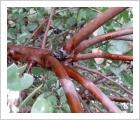
From the dry western areas of the USA beautiful in all its parts from the burnished copper-bronze twisted trunks to its wonderful large grey-green leaves and exquisite lily-of-the-valley flowers. Thoroughly drought tolerant when once established. Read more about Arctostaphylos manzanita ‘St Helena’
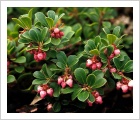
Rarely seen in Australian nurseries and growing a mere 15cm tall but spreading up to 100cm, this Californian native makes a dense carpet of small dark green leathery leaves. Exquisite pink, lily-of-the-valley flowers are produced during late winter and early spring. Read more about Arctostaphylos uva-ursi ‘Green Bay’
We apologise that this plant is currently sold out.
This new variety is a distinct break from the wild, summer blooming, Spanish species with its snow-white flowers. ‘Lemon Ice’ has 10 cent sized blooms which are lemon in bud opening to very pale lemon, which is almost white. Read more about Arenaria montana ‘Lemon Ice’
This evergreen and drought-tolerant groundcover forms a low evergreen carpet of small, glossy green leaves. This carpet is covered by large startling white flowers from spring into summer. Read more about Arenaria montana ‘Summer White’
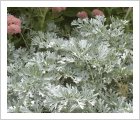
One of the late Marjorie Fish’s plants from her garden at Lambrook Manor. I find it to be the longest lived of all the wormwoods and we have had one plant in the double borders for nigh on 10 years and with a little judicial pruning it should be beautiful for 10 more. Read more about Artemisia absinthum ‘Lambrook Silver’
We apologise that this plant is currently sold out.
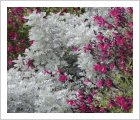
This tough, sun loving shrub will quickly make a 90cm wide by 60cm tall by 90cm wide mounds of handsome, glistening, much-dissected silver leaves. Best grown in full sun ‘Powis Castle’ tolerates drought very well.
Much asked about when in flower in our Dry Garden, this is a southern European plant which grows in pine woods, olive groves and heavily grazed land from south west Spain to Greece. Sometimes evergreen it is generally dormant during the two hottest months. Read more about Asphodelus aestivus
This is the Aster x frikartii that the late Dennis Norgate sold for so many years and it is one of the best if not the best of all Easter daisies. Difficult to propagate, it produces large, well shaped, cool lavender-blue flowers from February until May. Read more about Aster x frikartii ‘Jung Frau’
We apologise that this plant is currently sold out.
A plant of mostly dry ground in the eastern parts of the USA, this species does well for us. Aster ‘Calliope’ was raised in the 1890s at the RHS gardens and is more elegant in flower than most Easter daisies. Read more about Aster laevis ‘Calliope’
Bred by the team at Antique Perennials in Kinglake and with exceptionally dark purple blue flowers and a height of 120cm this is a superb new border plant for full sun. Read more about Aster ‘Otis’
We apologise that this plant is currently sold out.
‘Ruby Buttons’ is one of a new breed of Easter Daisy bred for the commercial cut flower trade as much as for the garden. 100cm tall stems clothed in glossy green, pointed leaves carry heads of full double ruby purple flowers in autumn. Read more about Aster ‘Ruby Buttons’
We apologise that this plant is currently sold out.
A sad name for one of the most beautiful plants you will ever grow. Formerly classed as a species of Eupatorium, this evergreen shrub produces fragrant, springtime clouds of lilac-purple pom-poms. It has large, textured, deep green foliage. Read more about Bartlettina sordida
We apologise that this plant is currently sold out.